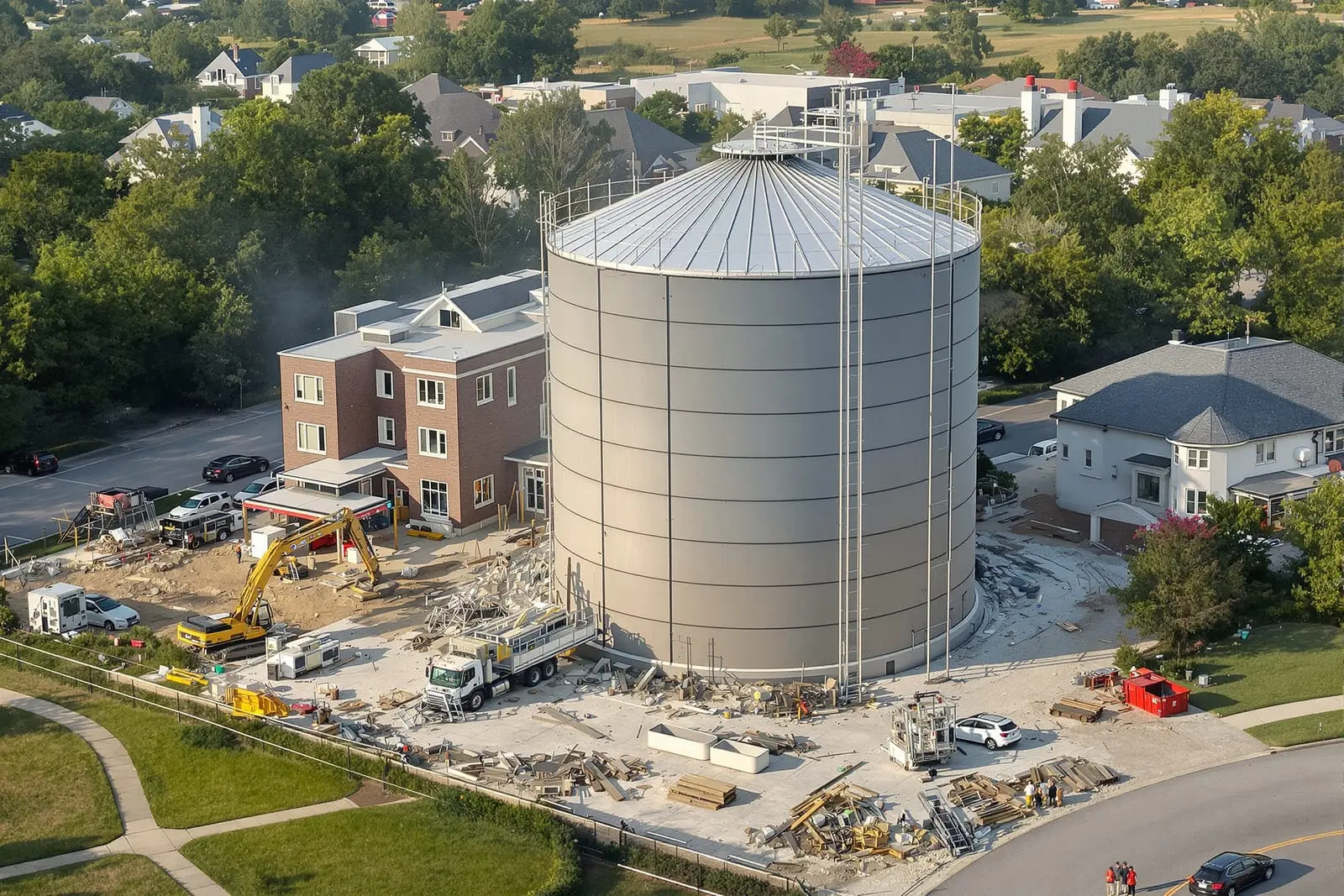
We perform tank demolition in Orlando, FL for above ground storage tanks, silos, and smokestacks at industrial and commercial sites. Our crews drain, clean, and inert tanks when needed, then cut or mechanically bring structures down in a controlled manner. Safety planning and spark control are central to every project.
Brava Demolition Orlando provides professional tank demolition throughout Orlando, FL and the surrounding area. Our licensed, insured crew delivers safe, clean, on-time work with a free estimate before anything begins. Call (689) 600-3239 or request your free quote.
Tank, Silo and Stack Demolition in Orlando, FL
Brava Demolition Orlando handles complex tank, silo and stack demolition projects across Central Florida with a focus on safety, engineering, and cost control. These structures are tall, heavy, and often located close to operating facilities, so the work has to be planned carefully from the first site visit.
For industrial and commercial clients in the Orlando area, we routinely dismantle fuel and water tanks, concrete and steel silos, and exhaust stacks at plants, warehouses, theme park support facilities, and municipal sites. Each type of structure behaves differently when cut or pulled, which is why we start every job with a structural and environmental assessment instead of a one-size-fits-all plan.
Local conditions matter. Central Florida’s high groundwater, frequent summer storms, and sandy soils affect how we stabilize equipment, set up cranes, and manage debris. Brava Demolition Orlando is set up to work around these constraints so you get a clean, safe removal with minimal downtime to your operation.
How Tank Demolition Actually Works
Demolishing tanks in Orlando usually follows a clear sequence: survey, clean, cut, and load out. The first step is identifying what the tank held and whether any product or sludge remains. For fuel, chemical, or process tanks, we coordinate with environmental firms or provide trusted referrals to pump out and gas-free the tank. No cutting or hot work begins until air monitoring confirms safe levels.
Once cleaned, we inspect the shell thickness, cone or floating roof design, and foundation type. Smaller upright tanks might be cut in place from the top down using torches or cold cutting saws. Larger field-erected tanks are often “sectioned” horizontally. We cut access openings, peel down panels in a controlled sequence, and rig each section so it cannot unexpectedly shift.
Cost for tank demolition in Orlando is usually driven by three factors: what was stored in the tank, how large and accessible it is, and how quickly the site must be turned over. Tanks that held petroleum or corrosive products require more cleaning, more air monitoring, and sometimes specialty coatings disposal, which increases cost. Tight access behind existing buildings or near wetlands may limit crane size and slow the process.
Brava Demolition Orlando typically schedules tank demolition outside of the afternoon thunderstorm window, especially in summer. We plan cutting and crane work in early morning blocks to reduce wind and lightning risk, then focus on sorting and hauling during storm-prone hours. This prevents weather delays from pushing your project off schedule.
Silo Demolition: Concrete vs Steel Approaches
Silo demolition methods depend heavily on construction type. In Central Florida we see a lot of reinforced concrete grain and aggregate silos, as well as welded or bolted steel silos used for plastics and cement. Each gets a different approach to keep dust, vibration, and noise within acceptable limits for the surrounding community.
Concrete silos are usually taken down from the top using mechanical means instead of blasting. Brava Demolition Orlando often uses high-reach excavators with hydraulic hammers or crushers to “chew” the walls down in rings. We may saw cut vertical relief joints so the concrete breaks in predictable sections, which helps control fall lines and reduces the risk to adjacent equipment or buildings.
Steel silos are often better suited to a cut and lower method. We start by emptying and cleaning the silo, then create man doors and rigging points. Using torches or mechanical shears, we cut the shell into panels and lower them with a crane or controlled mechanical pull. When space allows, we may partially tip a small silo using a pre-cut hinge line and guide cables, but only after a full engineering review and exclusion zone setup.
In the Orlando area, a common challenge is working around active operations such as feed mills or ready-mix plants. We sequence work so dust-producing activities are isolated, schedule noisy phases outside of your busiest production windows, and often bring in misting systems to knock down airborne dust in the humid Florida air. This keeps your neighbors and regulatory inspectors satisfied while the structure comes down.
Stack Demolition and Working at Height
Stacks, chimneys, and exhaust towers involve more at-height work and wind exposure than tanks or silos, so planning and access are critical. Brava Demolition Orlando evaluates stack height, material, and condition before choosing access: man-lifts, scaffolding, rope access, or high-reach excavators for shorter stacks.
For concrete stacks, the common approach is top-down mechanical removal. Crews work from a platform or scaffold, chipping and breaking the concrete in small sections and lowering debris through the interior or by chute. Reinforcing steel is cut and bundled separately for recycling. Steel stacks may be cut in segments and lowered by crane, with each section pre-rigged and tested before final cuts.
Wind off the lakes and afternoon storms around Orlando can make stack work unpredictable if not planned correctly. We monitor forecast wind speeds and lightning probability, and we set conservative limits for when cutting at height must stop. Anchoring, guying, and periodic inspections of access equipment are non-negotiable, especially when working above neighboring rooftops or public areas.
Because stacks often vent combustion products, Brava Demolition Orlando checks for residual soot, linings, and any internal coatings that might be regulated waste. Knowing this up front lets us choose correct cutting methods and disposal facilities and prevents change orders late in the job.
Planning, Permits, and Local Orlando Considerations
Tank, silo and stack demolition in Orlando requires more paperwork than many property owners expect. Within city limits or in Orange, Seminole, or Osceola Counties, structural removals may trigger demolition permits, utility clearances, and in some cases air quality notifications if asbestos or certain coatings are involved.
Brava Demolition Orlando helps identify which permits apply to your project and can coordinate with your engineer, environmental consultant, or general contractor. We verify underground utilities and, when necessary, arrange private locating to identify non-public lines like plant air, process piping, and private electrical feeds.
The best times of year to schedule this type of work locally are late fall through early spring. The weather is drier, daily storm risk is lower, and air temperatures are safer for extended cutting and equipment operation. Summer demolition is absolutely possible, but we build more weather downtime into the schedule and budget.
Access planning is another Orlando-specific issue. Many sites were developed in phases, leaving tanks or silos surrounded by buildings, fences, or retention ponds. Before mobilizing, we identify haul roads that will support heavy trucks on sandy subgrades, lay down temporary mats if needed, and plan traffic patterns that do not conflict with your customer or employee flow.
What Affects Price and How to Choose a Contractor
Pricing for tank demolition or removal of silos and stacks in Orlando is driven by more than height and tonnage. Key factors include contents and residues, structure type and condition, access for cranes and trucks, distance to approved disposal or recycling outlets, and your schedule requirements.
Brava Demolition Orlando provides itemized proposals whenever possible. You will typically see separate lines for cleaning or purge support, structural dismantling, hauling, recycling credits for scrap metal when applicable, and disposal of concrete, coatings, or regulated materials. On some projects, scrap value can offset part of the labor and equipment costs, but we do not inflate scrap estimates to win the job.
When comparing demolition contractors, ask for details on their specific experience with tanks, silos, and stacks, not just general building demolition. Request sample job plans or task hazard analyses, proof of insurance suited to industrial work, and a clear description of how they will protect adjacent structures and utilities. Contractors who only talk about speed, but not about sequencing and controls, are taking risks with your site.
A straightforward pre-job meeting goes a long way. At Brava Demolition Orlando we walk the site with you, point out likely problem areas like overhead power lines, weak slabs, or limited egress routes, and confirm how you want to handle noise, dust, and work hours. This prevents surprises and keeps your operation running while the obsolete tank, silo, or stack is safely removed.
“
Professional tank, silo and stack demolition, done right the first time, quality materials, honest pricing, and results that last.
Brava Demolition Orlando
Tank, Silo and Stack Demolition Across Our Service Area