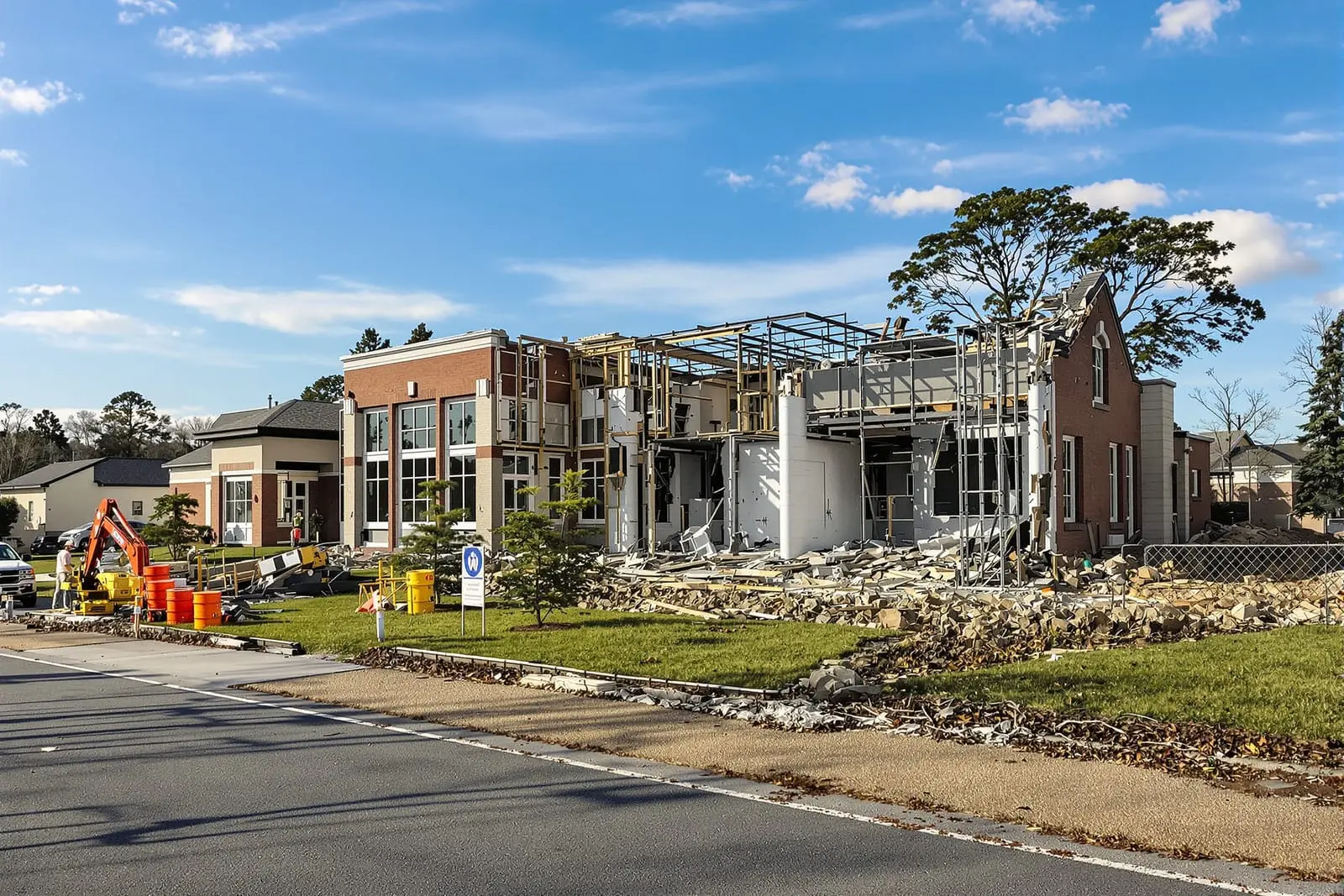
We provide school demolition in Orlando, FL for classroom wings, gymnasiums, dorms, and other institutional buildings. Projects are scheduled around school calendars and safety requirements with secure fencing and clear signage. Our team manages noise, dust, and traffic so campuses remain safe and functional during demolition work.
Brava Demolition Orlando provides professional school demolition throughout Orlando, FL and the surrounding area. Our licensed, insured crew delivers safe, clean, on-time work with a free estimate before anything begins. Call (689) 600-3239 or request your free quote.
School Demolition Expertise in the Orlando Area
Brava Demolition Orlando provides complete school and institutional demolition services for public and private clients across Orlando and Central Florida. Our team is experienced with K-12 campuses, charter schools, vocational centers, and older institutional buildings that often mix concrete block, structural steel, and portable classrooms. We understand that these projects are about much more than tearing down walls. They affect students, staff, and surrounding neighborhoods, so we plan every job around safety, schedule, and minimal disruption.
In Greater Orlando, many school buildings were constructed in phases from the 1960s through the early 2000s, often with flat roofs, CMU block, and selective structural retrofits for hurricanes. This staggered construction history means walls may hide multiple utility runs, abandoned conduits, and older materials that require specialty handling. Before we start, we walk the site with your facilities team, review existing drawings if available, and plan around active wings, temporary classrooms, and shared parking lots.
Whether you need a single classroom wing removed, an old cafeteria cleared to make way for a new STEM building, or a full campus demolition, we scale our crews and equipment to match your project. Brava Demolition Orlando coordinates closely with school boards, general contractors, and design teams so demolition supports, not delays, your overall construction schedule.
How School and Institutional Demolition Actually Works
A successful school demolition in Orlando begins with investigation and planning. We start with a pre-demolition survey that covers structural systems, fire walls, roof systems, utilities, and any hazardous materials. For older campuses in areas like Winter Park, Pine Hills, or Conway, this often means checking for asbestos in floor tiles and mastic, pipe insulation, and roofing, and testing for lead-based paint on doors and metal rails. We help coordinate licensed abatement contractors and schedule demolition only after abatement is complete and cleared.
Next, we locate and verify all utilities. Many Orlando campuses have been expanded multiple times, so live electrical, data, chilled water, and irrigation lines can run through buildings slated for removal. Working with your maintenance department and utility providers, Brava Demolition Orlando isolates, disconnects, or reroutes these services and documents the location of any live lines that must remain active for occupied areas.
During active demolition, we typically use high-reach excavators for multi-story classroom buildings, hydraulic shears for structural steel removal, and smaller equipment for interior demolition within areas that must be preserved. Block and concrete are separated for recycling, while metals are sorted for salvage. If portions of a campus remain operational, we often phase work around the school calendar, focusing high-noise activities during breaks, weekends, or summer recess.
We also support the general contractor with selective demolition, which might include removing only interior walls, ceilings, mechanical units, or a façade while preserving structural frames. This is common when Orlando schools modernize interiors but retain sound structures to save cost and time.
Safety, Compliance, and Working on Active Campuses
School demolition demands a different level of safety planning than typical commercial work. Brava Demolition Orlando builds site-specific safety plans that consider active classrooms, bus loops, parent pick-up areas, and after-hours activities like sports and events. Whenever demolition occurs near occupied spaces, we establish hard barricades, controlled access points, and clear separation between students and work zones.
Dust and noise control are key concerns for principals and facility managers. We use water suppression on concrete and masonry, install temporary barriers and negative air setups for interior work, and coordinate noisy activities like slab breaking with the school schedule. Our supervisors communicate daily with your on-site representative so there are no surprises for staff or neighbors.
Permitting and code compliance in Orange County and surrounding jurisdictions are handled in coordination with your design and construction team. We understand local requirements for demolition permits, traffic control plans, environmental documentation, and inspections. For institutions like technical colleges, medical training facilities, or municipal buildings, we also consider specialized systems such as labs, gas lines, and backup generators. We plan their safe shutdown and removal in cooperation with your engineers and specialty vendors.
For older institutional sites, we prepare for unexpected findings such as undocumented utilities or hidden fuel tanks. When these are discovered, our team pauses work in the affected area, secures the site, and works with environmental consultants and the owner to adjust the plan while keeping the rest of the project moving.
Common Challenges in Orlando School Demolition and How We Address Them
School and institutional demolition in Orlando comes with challenges that are specific to our climate, building types, and local development patterns. One frequent issue is limited site access on established campuses. Buildings may be surrounded by active classrooms, sports fields, or neighboring homes. Brava Demolition Orlando evaluates equipment access routes, staging areas, and debris haul paths early, then adjusts our methods. For tight sites, we may use smaller excavators, hand demolition, and more frequent debris hauling instead of a single large staging area.
Weather is another factor. Central Florida’s afternoon storms and hurricane season can affect schedule and site safety. We secure partially demolished structures at the end of each shift, avoid creating unstable walls that could be compromised by high winds, and plan critical operations like tall façade removal around forecast windows. Our crews are trained to respond quickly if weather conditions change, and we keep the client informed about any schedule adjustments.
Noise and vibration can affect testing schedules, nearby residences, or sensitive equipment in adjacent buildings. We can modify tool selection, sequence heavier demolition activities away from testing times, and install vibration monitoring if required by your engineer or insurer. For institutions like research facilities or hospitals, we coordinate closely with in-house teams to protect active labs, imaging equipment, or IT rooms.
Finally, older Orlando schools may have undocumented modifications from decades of small renovations. It is not unusual to find hidden mezzanines, blocked windows, or structural changes made without full drawings. Our supervisors are experienced at recognizing signs that conditions differ from plans, such as inconsistent slab elevations or misaligned rooflines, and they adjust methods to maintain structural stability and worker safety.
What Drives the Cost of School Demolition in Orlando
The cost of school demolition varies widely depending on building size, construction type, site conditions, and schedule constraints. Brava Demolition Orlando provides detailed proposals that break out major cost drivers so school districts and institutional owners can see where their budget is going.
Building composition is one of the biggest factors. Heavily reinforced concrete structures with thick roof slabs require more machine hours and specialized equipment than light steel or portable modular buildings. Multi-story classroom towers typically cost more per square foot to demolish than single-story wings due to fall protection requirements, high-reach equipment, and debris management.
Hazardous material abatement, while usually handled by a licensed abatement contractor, has a major impact on the overall schedule and must be coordinated closely with demolition. If asbestos floor tile or mastic is widespread, or if fireproofing and pipe insulation must be removed, the abatement timeline can shape when and how our crews mobilize. We plan our work so that as abated areas are cleared, demolition follows in logical phases rather than waiting for the entire site to be abatement complete.
Site logistics also affect pricing. Limited truck access, restricted working hours near residential neighborhoods, or strict noise windows during testing periods can increase the duration of the project. If heavy equipment must be moved onto campus during off-peak hours or escorted to avoid bus traffic, we factor that planning into our approach. On the positive side, Orlando’s strong recycling market for concrete and metal often allows us to recover some costs, which can help offset demolition expenses.
We encourage facilities and construction managers to involve us during preconstruction. By reviewing conceptual plans, we can suggest phasing or selective demolition strategies that may reduce temporary construction needs, cut hauling distances, or preserve utilities for future use.
Our Process and How to Get Started
From first conversation to final paving, Brava Demolition Orlando follows a clear and transparent process for school and institutional demolition projects.
1. Initial consultation and site walk: We meet with your facilities team, construction manager, or architect to understand the project scope, project constraints, and schedule targets. Walking the campus helps us identify access challenges, occupied areas, and any special considerations like historical structures or protected trees.
2. Document review and scope definition: We review any available drawings, prior renovation records, and environmental reports. If drawings are incomplete, we plan for exploratory openings to verify structural systems and utilities. Together with your team, we define whether the work is full demolition, partial building removal, or highly selective interior demolition.
3. Detailed proposal and schedule: We provide a written scope, assumptions, and a draft schedule that aligns with school calendars, exams, and construction milestones. If you are working toward a critical date, such as opening a new classroom building by the start of a school year, we plan demolition to protect downstream trades.
4. Mobilization and communication: Before work begins, we confirm fencing layouts, trucking routes, staging areas, and emergency contacts. Our superintendent holds daily huddles with the crew and regular check-ins with your representative. For larger projects, we can attend construction meetings to report progress and coordinate with other trades.
5. Demolition, recycling, and site cleanup: We execute structure removal, manage debris sorting and recycling, and clean up to the level required for the next contractor. This may mean leaving a rough-graded pad for new construction or fully restoring temporary access routes.
To discuss an upcoming school demolition or institutional project in Orlando or surrounding communities, you can contact Brava Demolition Orlando with your preliminary plans, even if they are not final yet. Early involvement allows us to plan a safer, smoother, and more cost-effective project for your students and staff.
“
Professional school and institutional demolition, done right the first time, quality materials, honest pricing, and results that last.
Brava Demolition Orlando
School and Institutional Demolition Across Our Service Area